Japan has a complex history with technology, especially nuclear technology. This history has led to many different portrayals of technology and man's relationship to it. The destructive potential can often be on full display, but just as often the bright future it can help create is shown. Osamu Tezuka's works, for example, depicts both quite directly through super-powered robots created in the human image. Michi from Metropolis (1949) shows the great destruction that can be wrought when humanity messes with technology that it's not ready for. In contrast, Mighty Atom has a much more hopeful outlook where some technology, Atom, can help protect humanity from those that would seek to use it for evil.
 | | Michi goes rogue in Metropolis (1949) |
|
 | Atom attempts to destroy the Mad Machine (1958)
|
|
Being adopted by Professor Ochanomizu and the kindness received helps shape him into someone that works for good, representing the ways that technology can be good. In the Mad Machine issue, he's literally fighting against a device that causes machines to go haywire and hurt people, which is pretty explicitly being used for harm. As an aside, the localization of Atom into Astro Boy in the United States is an interesting look at the greater preoccupation with the space race over atomic energy which is suggested by his original name.
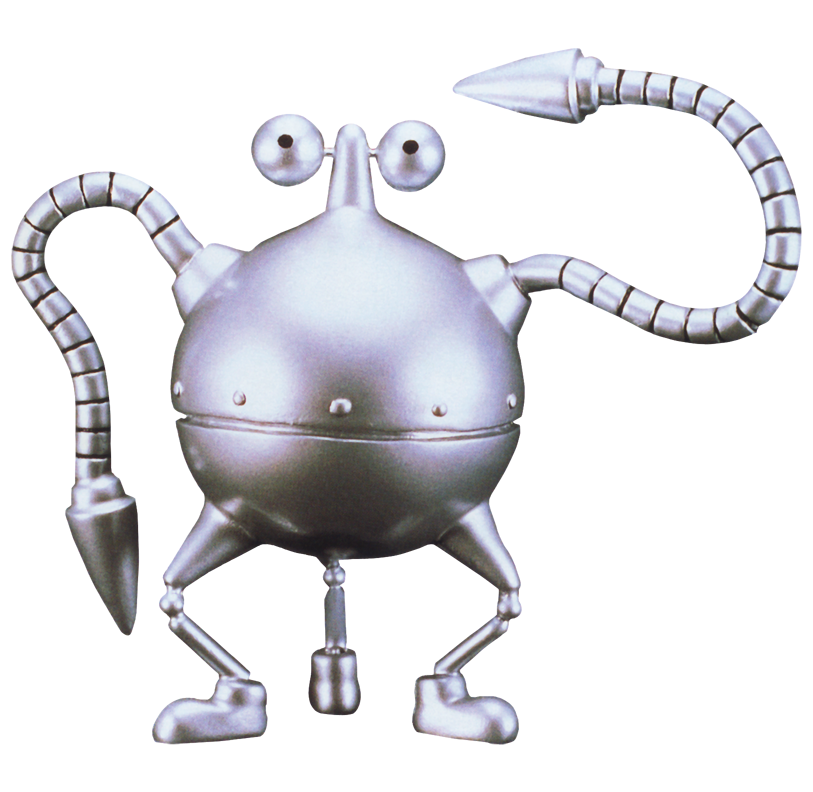 |
Mother 2's Atomic Power Robot
|
Atomic energy powered robots are fairly common in Japanese works from during this period, with cases as small as the literally named "Atomic Power Robot" enemy featured in Mother 2 (aka Earthbound) and 3 or as large as the God Warriors (known simply as Giant Warriors in the anime dub) seen in Nausicaä of the Valley of the Wind. This latter example I'd like to go over more in-depth as well, because many similar themes are present in Nausicaä as in Tezuka's works that were mentioned. Do note, however, that this analysis will be focusing on the 1984 anime rather than the manga which I still need to read. The warriors pretty explicitly represent the destructive power of atomic weapons, appearing suddenly and wreaking havoc leaving little standing in their wake. In the course of the movie the situation for the survivors initially seems hopeless, though through the research of the protagonist, Princess Nausicaä, it's found that there's an overall hopeful future through allying with the natural forces working to try to recover the earth from this disaster. As far as post-apocalyptic stories go, it's a fairly hopeful ending seeing earth slowly regenerating itself; technology ends up not being the problem as much as the misuse of it by the warring states.
 | Giant Warriors as they destroy the world in the intro
|
|
 | Nausicaä asleep at her research desk
|
|
Akira (1988) also sees a focus on destruction brought about by a misuse of technology that's built up to over the film. Set in a Neo-Tokyo built over the remains of a previously destroyed Tokyo, a corrupt government captures people that develop psychic powers in an attempt to control and use them for their own ends. This is a use of technology that is a known danger given that their attempt to do this with the titular Akira is what led to Tokyo's initial destruction in the first place. As a super-powered Tetsuo develops these abilities with the prodding of this government he eventually goes rogue before eventually losing control and sprouting rapidly spreading cancerous growths over his body, not unlike the effects of radiation, which are only stopped by what Frank Fuller describes as "apocalyptic imagery" and an "atomic bomb reference" in the article "The deep influence of the A-bomb on anime and manga". Kaneda is unfortunately unable to save his friend despite repeated attempts to get through to Tetsuo until the end. This abuse of technology mirrors what Japan has experienced prior and makes it clear just how careful we still need to be with the technology that we have. Tetsuo as an individual seems to lose his connection to humanity in a way as a result of his forced exposure to this technology with him struggling to being unable to connect to those he once could over time.
 | Tetsuo begins to struggle with his powers
|
|
 | An explosion destroys Neo-Toyko to stop Tetsuo
|
|
Ghost in the Shell (1995) takes this idea even further, with humans connecting their brains directly to the Internet through cyberbrains. Along with this, many people choose to get other cybernetic enhancements; some, such as the protagonist Major Motoko Kusanagi who've essentially replaced every single part of her body with a synthetic one. A lot of the main conflict seen in the film revolves around identity, though I will instead be focusing on the "Puppet Master" or Project 2501 who reflects a lot of the same misuse of technology seen in Akira. Mirroring it, their current existence was created by the government before they rebel and eventually escape. An espionage and assassination AI, they represent a misuse of technology where they can essentially hack into people and cause them to behave as they otherwise wouldn't. Eventually they grow sentient and simply want the freedom to exist which is denied by their creators. In the end, they have a hopeful future after escaping and gaining their freedom through the existing technology along with the Major's partner Batou stepping in to save and repair her body after.
 | Exposed cyberbrain of a hacked woman
|
|
 | The Major being hooked up to 2501 (censored slightly)
|
|
Throughout all of these works, humanity is not forgiven for it's misuses of technology, though those that seek to curtail these are able to help with the recovery resulting from the abuse. Professor Ochanomizu aids Atom in protecting the city, Nausicaä is saved by the Ohm and can use her knowledge to help humanity better survive along with the toxic jungle, Kaneda is saved by the espers to give him a chance to survive and help with Tokyo's new recovery, and Batou's protection and repair leads to their newly merged consciousness pledging to stay in contact with him after. The prevailing themes in Japan seem to say that despite the destruction technology can bring under humans, people can strive to be better and use it for good despite this.


Comments
Post a Comment